What Does Emotional Freedom Feel Like? Healing from Anxiety, Trauma, and Survival Mode.
There is something about Independence Day that causes many of us to pause.
We celebrate freedom with fireworks, backyard barbecues, time with family, and reminders of the sacrifices made so others could live freely.
But there is another kind of freedom that doesn't receive nearly as much attention.
It's the freedom to finally breathe.
The freedom to stop apologizing for taking up space.
The freedom to make a decision without wondering what everyone else will think.
The freedom to sleep through the night without your mind replaying every conversation.
The freedom to rest without feeling guilty.
The freedom to stop surviving and finally start living.
For many people, that's the freedom they're still searching for.
And unlike political freedom, emotional freedom isn't something someone else can give you. It's something you slowly reclaim through healing.
What Is Emotional Freedom?
When people hear the word freedom, they often think about independence, choice, or the ability to live life on their own terms.
Emotional freedom is similar.
It doesn't mean you're happy all the time.
It doesn't mean life suddenly becomes easy.
It means your past no longer dictates your present.
It means anxiety doesn't make every decision for you.
It means guilt no longer controls your relationships.
It means fear no longer determines how small you have to live.
True emotional freedom is the ability to respond to life rather than constantly reacting from old wounds.
That kind of freedom changes everything.
Sometimes the Hardest Prison Is the One No One Else Can See
Many of the people I work with appear successful from the outside.
They have careers.
Families.
Responsibilities.
People depend on them.
They're the ones everyone describes as "strong."
But behind closed doors, they often tell a very different story.
They're exhausted.
Their minds never stop racing.
They replay conversations over and over.
They struggle to relax, even on vacation.
They feel guilty whenever they put themselves first.
They're constantly anticipating the next problem before it happens.
They've become so accustomed to carrying everything that they no longer remember what it feels like to simply exist without tension.
If this sounds familiar, you're not broken.
Your nervous system has simply become very good at protecting you.
Living in Survival Mode Isn't a Personality Trait
One of the most common phrases I hear in therapy is:
"I don't know how to shut my brain off."
Many people believe they're simply anxious by nature.
Others describe themselves as perfectionists.
Some assume they're just "wired this way."
But what they're experiencing is often something different.
They're living in survival mode.
When your brain experiences ongoing stress, trauma, emotional neglect, unpredictable relationships, chronic criticism, or overwhelming responsibility, it adapts.
It becomes hypervigilant.
Your brain starts scanning for danger before danger actually exists.
It learns that staying alert feels safer than relaxing.
Over time, your nervous system begins treating everyday life as though it's an emergency.
Even when you're safe.
Trauma Doesn't Always Look Like One Catastrophic Event
When many people hear the word trauma, they picture combat, serious accidents, abuse, or natural disasters.
Those experiences absolutely can be traumatic.
But trauma can also develop through repeated experiences that slowly teach your nervous system the world isn't safe.
It may look like:
Growing up walking on eggshells.
Never feeling emotionally safe.
Always being the responsible one.
Having to grow up too quickly.
Living with constant criticism.
Being bullied.
Losing someone important.
Medical trauma.
Years of burnout.
Emotional neglect.
Chronic stress.
Toxic relationships.
High-pressure careers where mistakes feel catastrophic.
Trauma isn't measured by the event itself.
It's measured by what happened inside your nervous system.
Why Anxiety Feels So Hard to Turn Off
Anxiety isn't simply "thinking too much."
It's your brain trying to protect you.
Unfortunately, once the nervous system becomes accustomed to scanning for danger, it doesn't always recognize when the danger has passed.
That's why people find themselves:
replaying conversations
imagining worst-case scenarios
struggling to relax
feeling guilty when resting
needing to stay productive
fearing they'll disappoint others
feeling responsible for everyone else's emotions
These aren't character flaws.
They're survival strategies.
Strategies that once served a purpose.
Strategies that no longer serve the life you're trying to build.
What Emotional Freedom Actually Feels Like
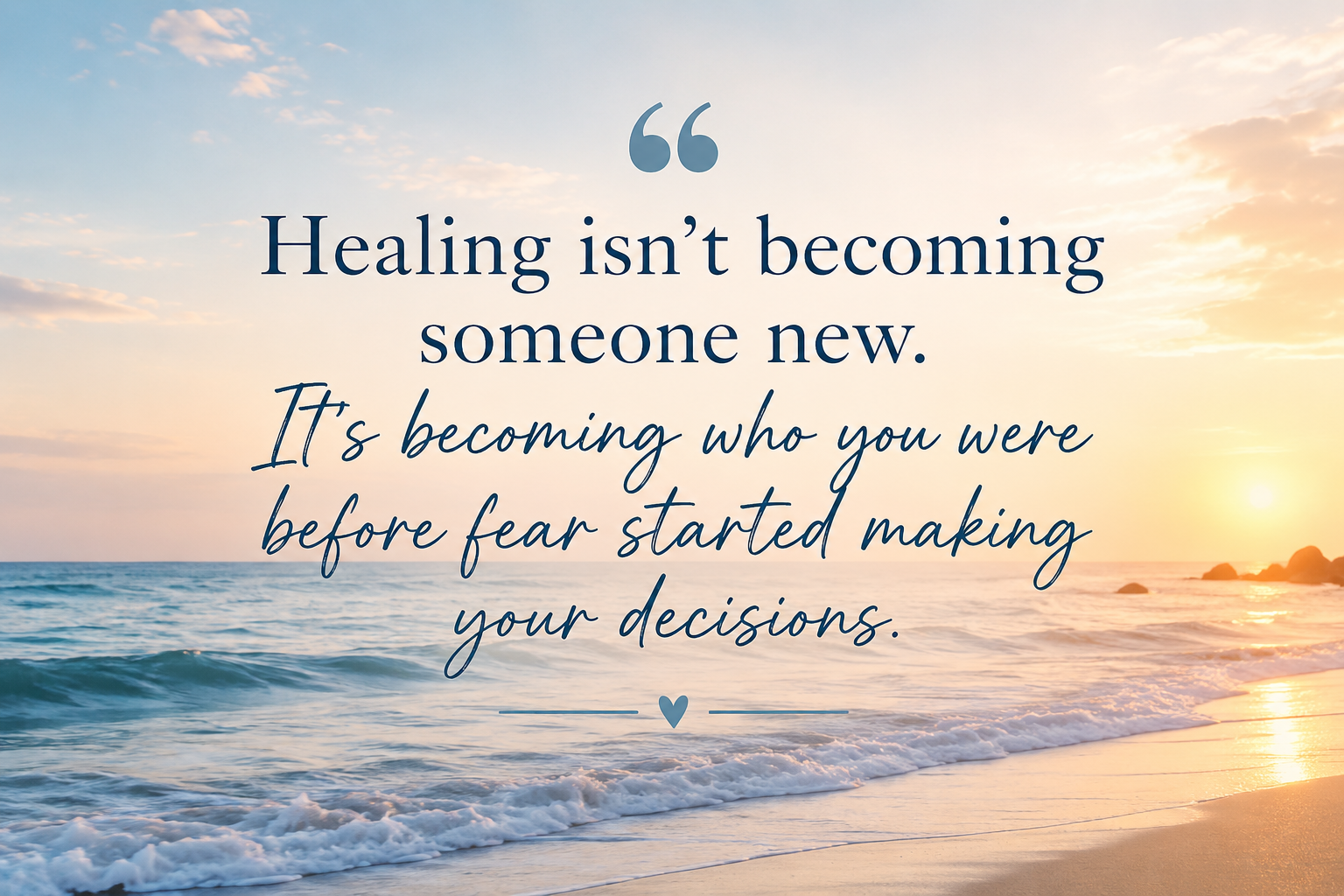
Healing isn't becoming someone completely different.
It's remembering who you were before fear began making your decisions.
Emotional freedom often sounds surprisingly quiet.
"I don't need everyone's approval."
"I can say no."
"I don't have to fix everyone."
"I can rest."
"I trust myself."
"I can make mistakes without believing I'm a failure."
"I don't need to earn my worth."
"I can enjoy today without worrying about tomorrow."
These aren't dramatic moments.
They're everyday victories.
And together, they transform a person's life.
Freedom Doesn't Mean Fear Disappears
One of the biggest misconceptions about therapy is that healing means you'll never feel anxious again.
That's not realistic.
Fear is part of being human.
Healing means fear no longer gets the final vote.
You can feel anxious...
...and still have the difficult conversation.
You can feel uncertain...
...and still move forward.
You can remember painful experiences...
...without allowing them to define your future.
That is emotional freedom.
Therapy Helps You Reclaim Emotional Freedom
Therapy isn't about pretending the past never happened.
It's about understanding how your experiences shaped your nervous system, your relationships, your beliefs about yourself, and the ways you've learned to survive.
Together, we begin identifying those patterns.
We build healthier ways of responding.
We teach your nervous system that safety is possible again.
For some clients, that includes approaches like EMDR to help process traumatic memories.
For others, it means learning healthier boundaries, rebuilding self-worth, reducing anxiety, or breaking long-standing patterns of people-pleasing and perfectionism.
Healing isn't about becoming someone else.
It's about becoming more fully yourself.
This Independence Day, Ask Yourself One Question
As fireworks light the sky this Fourth of July, consider asking yourself a different kind of question.
What has been controlling my life for far too long?
Fear?
Perfectionism?
People-pleasing?
Past trauma?
Burnout?
Anxiety?
The opinions of others?
You don't need to have all the answers today.
You simply need to become curious.
Because awareness is often the first step toward freedom.
You Deserve More Than Survival
If you've spent years carrying the weight of anxiety, trauma, burnout, or overwhelming responsibility, know this:
You do not have to keep living in survival mode.
Healing is possible.
Emotional freedom is possible.
And while the journey isn't always easy, you don't have to walk it alone.
At Strong Self Psychotherapy, I help adults navigate anxiety, trauma, burnout, high-pressure careers, and life transitions through compassionate, evidence-based virtual therapy.
Whether you're looking to process past experiences, quiet a constantly racing mind, or simply reconnect with yourself, therapy can help you move beyond survival and toward a life that feels grounded, authentic, and emotionally free.
Because you fought hard to survive.
Now it's time to discover what it feels like to truly live.
Continue Reading
If this blog resonates with you, you may also find these helpful:
More….. https://www.strongselfpsychotherapy.com/blog-expert-personal-reflections-on-mental-health