When Your Nervous System Speaks: Why Crowds Feel Overwhelming and How to Regulate
We’re Not as Self-Aware as We Think We Are
There is a quiet assumption most people carry that they understand themselves. We explain our reactions in simple, familiar ways because it gives us something to hold onto. We say we are introverted, or that we do not like crowds, or that we get overwhelmed easily. Those explanations are not necessarily wrong, but they are often incomplete.
What we call personality is frequently our nervous system responding to the environment around us. It is responding to noise, proximity, unpredictability, and sometimes to experiences that have shaped how our body processes stimulation over time. Instead of recognizing that, we often override it. We stay longer than we want to in crowded spaces, we ignore the tension building in our chest, and we move through environments that feel like too much while telling ourselves that we are fine.
Over time, we lose the ability to distinguish between discomfort and nervous system dysregulation. We stop recognizing when our body is not just uncomfortable, but actively working to manage more than it can comfortably hold.
And we build expectations on top of that misunderstanding. We assume we should be able to enjoy certain environments in a certain way, that we should be able to tolerate the pace, the noise, the density, because other people seem to.
That expectation becomes the standard.
Even when it does not match our reality.
Travel Has a Way of Revealing What You Can Usually Avoid
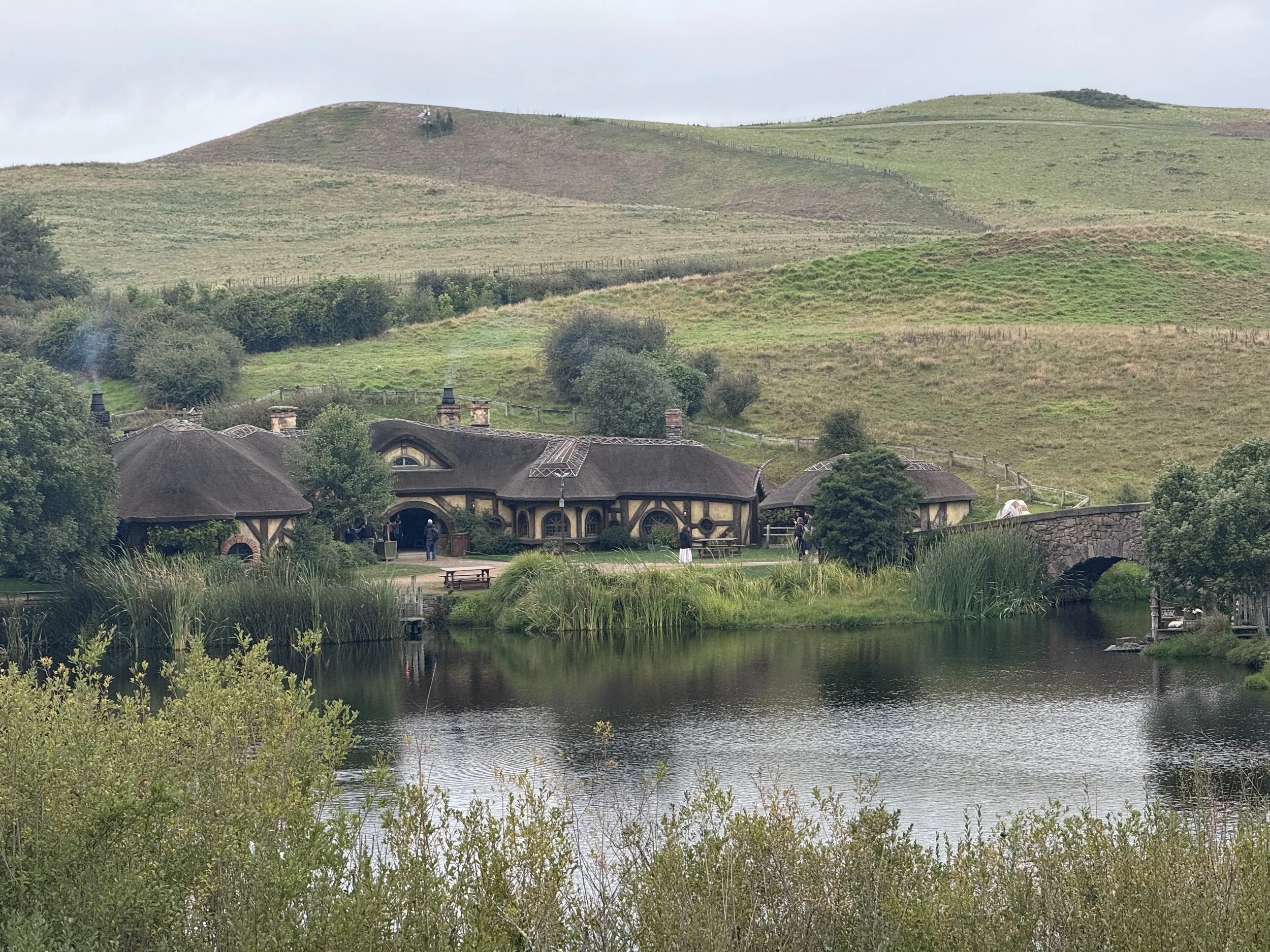
This is what I had been holding in my mind—slow, quiet, and enough space to actually experience it.
I was in New Zealand for a work training, and I had intentionally built in time to explore while I was there. I was genuinely looking forward to it, not just in the sense of seeing new places, but in the deeper sense of being in environments that held meaning for me.
There are places that exist in your internal world long before you ever physically arrive. They are tied to memory, imagination, or a version of yourself that felt different at some point in your life. For me, one of those places was the LOTR Hobbiton Movie Set. It represented something quieter, more grounded, and more intentional than the pace of everyday life.
Before I ever got there, I had already created an expectation of what that experience would feel like.
I imagined a slow, almost idyllic walk through this space. I imagined moving quietly, taking in the details without being rushed, allowing myself to pause wherever something caught my attention. I expected space—not just physical space, but internal space. Space to reflect, to process, to let whatever surfaced in me actually land.
I even imagined moments of stillness, where I could stop and pray, or simply stand in it long enough to feel it fully.
That was the experience I was looking forward to.
When the Experience Lands, but Your Body Cannot Stay There
When I first walked through Hobbiton, there was a moment where everything slowed down. My nervous system recognized the environment almost immediately. The details, the landscape, and the familiarity created a brief sense of calm that did not require effort. It simply happened.
That is what regulation feels like. It is not forced or manufactured. It is a state where your body is able to settle without resistance.
But that moment was brief.
Because the actual experience was vastly different from what I had expected and hoped for.
The space was filled with people moving continuously, often in close proximity, and the pace of the tour did not allow for pause. There was very little opportunity to step aside, to linger, or to move at anything other than the group’s speed. The experience felt structured and efficient in a way that directly contrasted with the quiet, spacious, reflective experience I had imagined.
And what I noticed was not just disappointment.
It was that my body could not fully settle within it.
There was a steady internal tension that began to build, not overwhelming, but persistent and unmistakable. I did not want to move quickly through something that mattered to me. I wanted to take it in, to process it, and to allow it to land in a way that felt meaningful.
The environment did not support that.
And my nervous system responded accordingly.
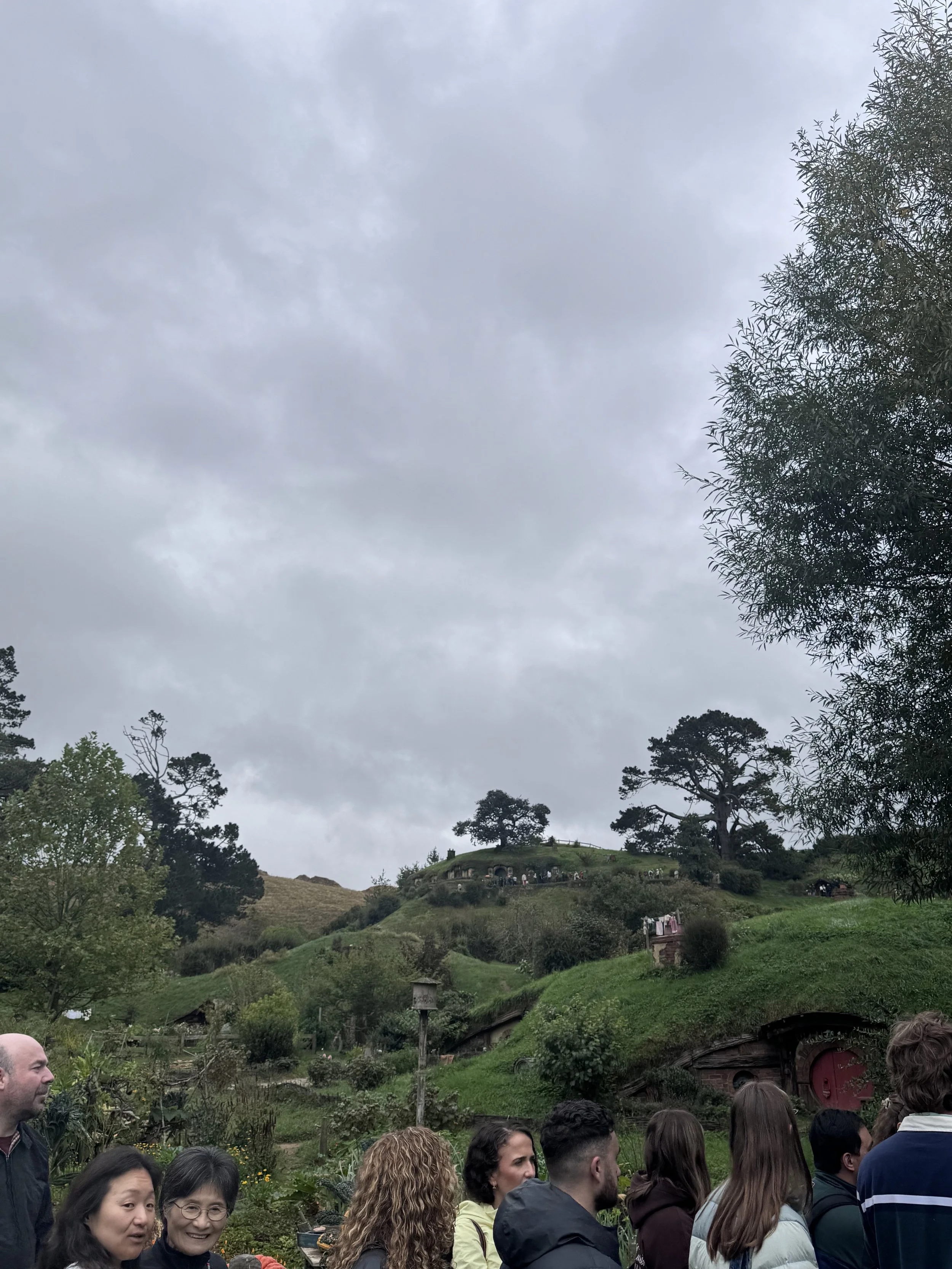
This is where the experience shifted—from something I wanted to feel, to something my body had to manage.
Recognizing the Difference Between Expectation and Capacity
For a long time, I have described myself as introverted. While that is true, this experience made it clear that something more was happening beneath that label.
This was not simply a mismatch between what I prefer and what was available.
It was a mismatch between what I expected to be able to hold and what my nervous system actually had the capacity to process in that moment.
There is a meaningful difference between preference and dysregulation. When something is simply not your preference, your body can still settle within it. When your nervous system is dysregulated, your body shifts into a state where it is actively managing input and struggling to return to baseline.
That is what sensory overload looks like in real time. It is not always dramatic or visible, but it is experienced internally as tension, increased awareness, difficulty settling, and a sense of being unable to fully arrive in the moment.
Understanding What Is Happening in the Body
From a clinical perspective, environments that include constant noise, movement, and proximity require the brain to continuously scan and interpret incoming information. This process is largely automatic, but it demands energy and capacity.
For individuals with a history of trauma, chronic stress, or high-demand roles, the nervous system often operates with a higher baseline level of alertness. When additional stimulation is introduced, the system does not simply adjust. It becomes more activated.
This is why environments that appear manageable to others may feel overwhelming to you. Your system is not failing. It is responding based on its capacity and its history.
This is where having structured support for nervous system regulation can make a significant difference, particularly when your system has been operating at a heightened baseline for an extended period of time.
The Accumulation Effect: When It Builds Over Time
What became clear over the course of this trip was that the experience was not defined by a single moment. It was the accumulation of multiple days in stimulating environments without enough recovery in between.
Each experience added another layer. Each day required my system to process more without fully resetting.
Eventually, that buildup reached a point where my body needed something different.
So I stepped back.
I created distance. I allowed quiet. I stopped trying to match the pace around me and instead responded to what my system actually needed.
This is where expectation often gets challenged.
Because the expectation says you should continue.
The reality says you need to pause.
Regulation Is Not Avoidance
There is a tendency to interpret stepping back as avoidance, especially in environments where pushing through is normalized.
But there is a difference.
Avoidance disconnects you from your life.
Regulation allows you to return to it.
What I was doing was not withdrawing in a way that limited me. I was creating the conditions necessary for my nervous system to settle so that I could engage again in a way that was actually present.
Without regulation, experiences become something you endure.
With regulation, they become something you can actually absorb.
What Regulation Looked Like in Practice
When I allowed myself to step back, I began to notice a shift. My body responded to reduced input in a way that felt immediate and grounding.
From a clinical standpoint, what I was doing was reducing sensory load, increasing predictability, and allowing my nervous system to return to a more regulated state.
In practice, this meant slowing my pace instead of matching everything around me. It meant choosing physical space when it was available, even in small ways. It meant stepping away briefly before the tension built too far, rather than waiting until I was already overwhelmed.
It also meant acknowledging what was happening internally instead of minimizing it.
These are not dramatic interventions.
They are consistent, intentional adjustments that allow the nervous system to recalibrate.
Environment Matters More Than We Want to Admit

This is where my system finally had space to settle.
The contrast between Queenstown and Auckland made this even clearer.
In Queenstown, my system settled with very little effort. The space, the quiet, and the slower pace created an environment that supported regulation naturally.
In Auckland, I felt the shift immediately. My body was more alert, less settled, and it required time to adjust.
This does not mean one environment is better than the other.
It means my nervous system responds differently to each.
And that matters more than what I think I should be able to tolerate.
If You Are Starting to Recognize This in Yourself
If you have ever found yourself overwhelmed in crowds and dismissed it as just part of who you are, it may be worth looking at it more closely.
If noise, proximity, and constant movement leave you feeling unsettled, or if you need more time to recover after stimulation than others seem to, your nervous system may be responding to more than you realize.
This is especially true for individuals who have experienced trauma or chronic stress, as their systems are often more sensitive to environmental demands.
Recognizing this is not a limitation.
It is awareness.
Closing Reflection: Where Expectation Meets Truth
What this experience ultimately gave me was not just insight into my nervous system, but a clearer understanding of the gap between expectation and reality.
I expected a quiet, reflective, almost sacred experience.
What I encountered was something structured, fast-paced, and crowded.
And in that gap, I was given something I did not expect.
Clarity.
Clarity about what my nervous system actually needs. Clarity about how I move through environments. Clarity about the importance of space, pace, and the ability to pause.
There is something deeply important about allowing yourself to experience a place—not just physically, but internally. That requires time. It requires quiet. It requires enough space for your body to settle so that your mind and your spirit can actually engage.
Without that, you are present in location, but not in experience.
And for me, that matters.

This is what it feels like when your system is no longer trying to keep up.
Final Truth
There is nothing wrong with you if your nervous system responds differently than the people around you.
There is nothing wrong with needing more space, more time, or a different pace.
And there is something deeply right about listening to that, even when it challenges what you expected the experience to be.
Moving Forward
If this resonates, and you are beginning to recognize patterns in how you respond to your environment, this is where meaningful work begins.
Not by pushing harder.
Not by overriding.
But by understanding your system and learning how to support it in a way that allows you to stay present, steady, and connected.
If This Feels Familiar, You Don’t Have to Navigate It Alone
If you are recognizing yourself in this—the overwhelm, the need for space, the difficulty settling in environments that others seem to move through easily—there is nothing wrong with you.
Your nervous system is responding exactly the way it was shaped to respond.
The work is not about forcing yourself to tolerate more. It is about understanding your system and learning how to regulate it in a way that allows you to feel steady, present, and in control again.
At Strong Self Psychotherapy, I work with individuals in high-stress roles and environments who need real, practical ways to manage overwhelm, regulate their nervous system, and reconnect with themselves.
If you are ready to understand what is happening in your body and learn how to work with it instead of against it, you can start here. https://strongselfpsychotherapy.clientsecure.me
-Adrienne