

Online Therapy for Doctors, Nurses & Healthcare Professionals
You take care of everyone’s worst day. Who takes care of you?

You’ve been the calm one in the room all day. You’ve delivered bad news, held a hand, charted until your eyes blurred, and then driven home in silence. Somewhere along the way, “I’m fine” turned into a reflex.
I’m Adrienne M. Koller, a licensed trauma therapist. I work with doctors, nurses, chaplains, and other healthcare professionals who carry other people’s worst moments and have nowhere to put their own.
I offer online therapy in California, Texas, South Carolina, Florida, Utah, Maine, Idaho, Ohio, and Vermont and in person Walk and Talk appointments in Ventura, Oxnard, and Malibu, Ca.
Does this sound like your week?
You dread the shift before it starts, then feel guilty for dreading it.
You finish a hard code or a conversation with a grieving family and walk straight into the next room.
You chart at home, replay your decisions at 2 a.m., and wonder what you missed.
You’re short with your partner and kids, or you’ve gone quiet and flat.
You can’t remember the last day off you didn’t spend checking your inbox.
You need a drink or a screen to come down after a shift.
You’re good at your job, and it still never feels like enough.
Nothing on that list means you’re not cut out for medicine. It means you’ve been giving more than the system gives back.
What burnout looks like in medicine

Compassion fatigue and vicarious trauma
Witnessing suffering and loss day after day leaves a residue that doesn’t wash off at the sink. Eventually the empathy that made you good at this runs out, and what’s left is irritability, numbness, or silence.

Moral injury
You’re asked to practice in ways that cut against your values: not enough time, not enough staff, decisions made by people who’ve never met the patient. The distress that follows isn’t weakness. It’s your conscience taking a hit.

The fear of the mistake
In your job, one oversight can be catastrophic. So you check, recheck, and never quite switch off, even at home.

Being the isolated clinician
You mentor, lead, and smile for your team while feeling disconnected from everyone outside medicine. People assume they understand. They don’t.
You don’t need a textbook definition of physician burnout. You’re living it.
Private, independent, and separate from your employer
I know the worries healthcare professionals bring in with them: privacy, licensing, credentialing, and what a hospital might think. My practice is private pay and independent of your employer. Confidentiality is protected by applicable law and professional ethics, with the legal exceptions that apply to all therapy. Licensing and credentialing disclosure requirements vary by jurisdiction and institution, and clients should review the actual questions on their applications.
You deserve a place to say what’s true without wondering who’s reading.
How I Work
You already know what self-care is. If it were that simple, you’d have done it. I’m not going to hand you a worksheet about sleep and boundaries.
We start by getting you steady, then work on what’s underneath, at your pace. I’ll tell you straight when I see a pattern that’s costing you.
Explore the treatment approaches offered at Strong Self Psychotherapy:
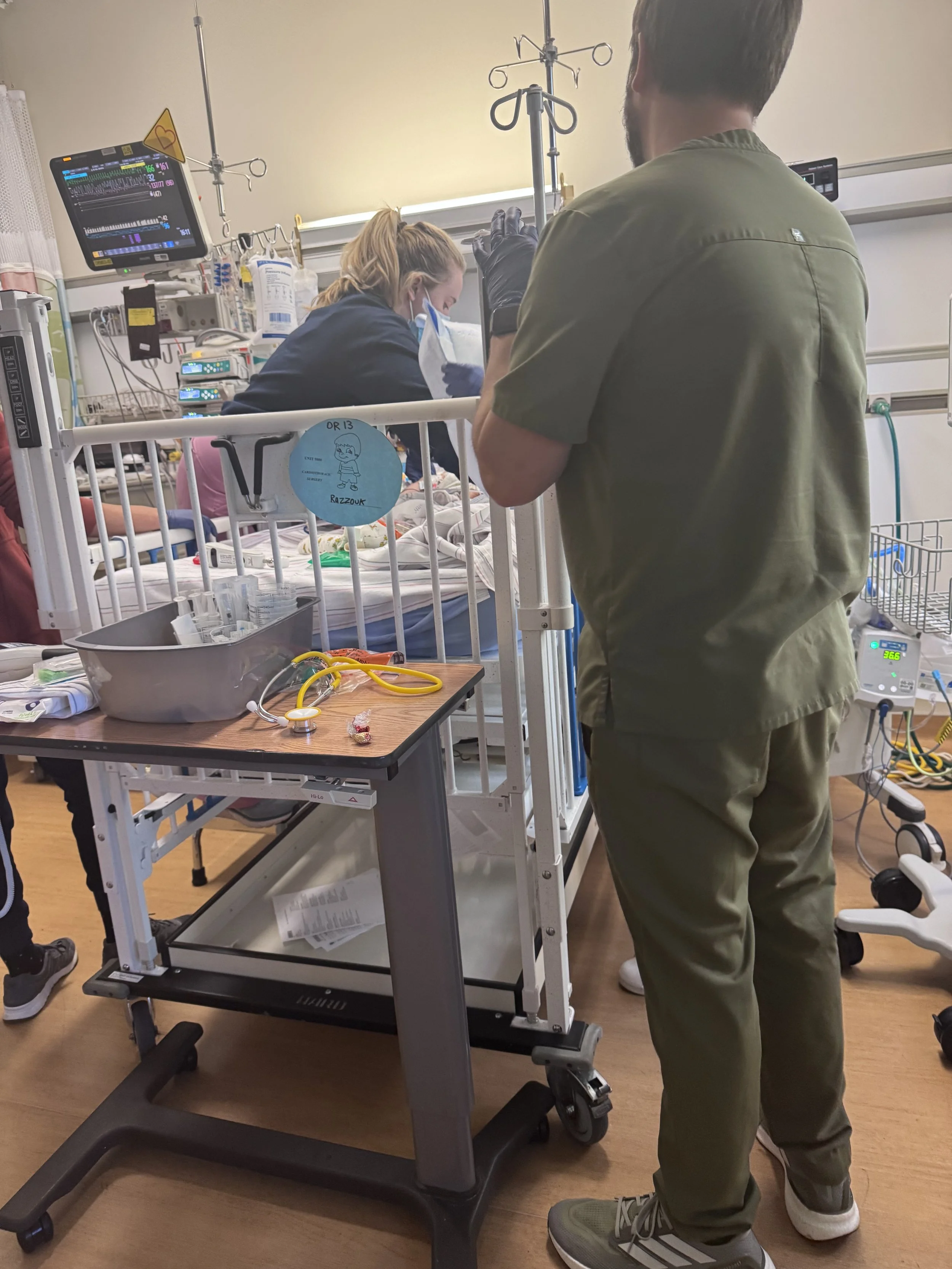
Some of the care team who looked after my grandson.
I know what it costs to carry other people’s worst days
I’m not a doctor or a nurse, and I won’t pretend to know your chart. But I’ve been on the other side of the bed. When my grandson was in the hospital, I watched the people caring for him, and I saw how much energy the work takes and how tired they were. I know how long you can look fine while it’s happening.
Therapy that fits a hospital schedule
The medical field doesn’t run 9 to 5, and neither should your support. My online sessions account for shiftwork, on-call weeks, and post-call recovery days. With virtual sessions, there’s no commute and no waiting room where you might run into a colleague.
Please note: you do need to be physically in one of the states I’m licensed in at the time of your session.
What happens when you reach out

I confirm the appointment and send an invitation to my patient portal to complete intake paperwork.
You schedule online

We go over what’s going on, what you’ve tried, and what you want. When it helps, we use short screenings for things like trauma symptoms, anxiety, and depression. Nobody needs to perform here.
We meet online

We start with whatever you need first, whether that’s getting steady, processing something specific, or building skills. You set the pace.
We build a plan
Frequently Asked Questions
-
Yes. Repeated exposure to suffering, loss, and high-stakes decisions can lead to compassion fatigue, emotional exhaustion, and trouble connecting with others. Therapy can help you process these experiences, set healthier boundaries, and regain emotional balance without losing the compassion that brought you into healthcare.
-
Yes, within applicable legal and ethical limits. I’m private pay and independent of your employer, and I don’t routinely submit insurance claims for your treatment. Standard documentation requirements and legally required disclosures still apply.
-
Yes. I offer virtual therapy in the states where I’m licensed and authorized to practice. Telehealth lets you attend without commuting to an office, which makes it easier to fit treatment around shifts, on-call responsibilities, and your life.
-
I don’t report to your employer or licensing board unless you sign a written release or the law requires it.
Licensing and credentialing disclosure requirements vary by jurisdiction and institution, and clients should review the actual questions on their applications.
-
They overlap a lot, and you don’t have to sort it out alone. We’ll do that together in the first sessions. If something needs a medical evaluation or a different level of care, I’ll tell you.
-
EMDR, CPT, WET, PE, CBT, and DBT skills. We decide together based on your history, symptoms, and goals. Details here.
-
I offer online therapy in California, Texas, South Carolina, Florida, Utah, Maine, Idaho, Ohio, and Vermont. I offer Walk & Talk Therapy in Ventura, Oxnard, and Malibu, Ca.
You need to be physically in one of those states at the time of your session.
-
Online sessions are $225 for 50 minutes, plus a one-time $250 intake. Walk & Talk sessions are 60/90 minutes and are $250/$325 plus a one-time $250 intake.
I’m private pay and provide superbills you can submit for out-of-network reimbursement. I keep a limited number of sliding-scale spots.
Still have more questions? Click here
You’ve spent your career fighting for other people. You get to fight for yourself too.
You don’t need the words yet. Reach out and we’ll start where you are.
If you’re in crisis, call or text 988 or call 911.